Reducing Risk - Practical Strategies for Safe Handling of Ignitable Liquids
ArticleFebruary 24, 2026
Ignitable liquids pose significant fire and environmental hazards at commercial and industrial sites. Their volatility and combustibility mean even small leaks or spills can escalate quickly, leading to major property loss, operational disruptions, and environmental damage. Awareness of this risk and how to control it remains critical for site operators and insurers alike. In this article, Zurich Nordic’s risk engineer Ida Nygård provides an overview of today’s challenges and how to mitigate risks.
Ignitable liquids are substances containing volatile organic compounds (VOCs) with a measurable flash point, capable of producing vapors that can ignite in the presence of an ignition source. This group includes liquids commonly referred to as flammable (low flash point, generally below 38°C) and combustible liquids (flash point generally above 38°C). Common examples, such as hydraulic oils, lubricants, aerosols, solvents and diesel, are widely used across many industries and are often essential for daily operations. However, these liquids also pose significant fire, explosion, and environmental hazards. Safe handling procedures, effective safety controls, proper fire protection, and ongoing awareness are examples of critical controls needed to properly manage these hazards.
Beyond Legal Requirements: Enhancing Risk Controls for Ignitable Liquids
Local legislation and EU laws outline basic minimum safety measures for ignitable liquids. However, insurers, like Zurich, recommend additional controls, such as advanced leak detection, containment, drainage, fixed fire protection and automatic shut-off valves, to address evolving risks. Regulatory requirements may differ depending on region, amount, and classification of hazardous substances. In the Nordics each country that are EU or EEA members follow the EU’s CLP (Classification, Labelling and Packaging) Regulation and REACH Regulation for chemical safety. Additional requirements are provided by directives such as Seveso III, which addresses major accident hazards, and the ATEX Directive, which covers explosive atmospheres. While these directives establish a broad regulatory framework, each country implements its own specific national laws for the storage, transport, and use of ignitable liquids in both private and commercial settings, to ensure compliance with EU standards.
Strengthening Site Safety: Key Measures for Managing Ignitable Liquids
Ignitable liquids can quickly spread across large areas when released and those with low flashpoints are easily ignited. Effective risk management requires multiple controls, including measures to prevent spills, reduce ignition sources, and implement suitable fire protection systems to minimize consequences in the event of a fire. Below are some examples of control and protection methods that can be used to manage these risks.
- Ventilation
- When handling low flash point liquids, effective ventilation systems can be used to reduce the concentration of ignitable vapors in the air. Keeping vapor concentration well below the lower flammability limit, lowers the risk of vapor ignition and maintains conditions within safe limits.
- Drainage
- Drainage systems are designed to safely direct any spills or leaks of ignitable liquids away from sensitive areas to a safe location. This prevents liquid pooling and minimizes the risk of fire, while also helping to contain environmental contamination by directing runoff to approved containment or treatment facilities. Drainage systems should in general be designed to handle both the liquid spill plus any firefighting water discharge.
- Containment
- Secondary containment structures, such as bunds and spill trays, provide an extra layer of protection by capturing leaks or spills of ignitable liquids.
- Ignition source control
- Controlling potential ignition sources is essential in any area where ignitable liquids are involved. This includes regular ignition source control such as prohibiting open flames and establishing “hot work” permit systems. In addition, special care is needed for electrical equipment and static discharges when low flashpoint liquids are involved.
- When handling low flash point ignitable liquids, grounding and bonding of containers, pipes, and transfer equipment are critical to prevent build-up of static electricity. A static discharge may ignite vapors during activities such as filling or mixing. Grounding and bonding dissipates charges in a controlled manner to avoid static discharges.
- Electrical equipment needs to be properly EX rated when low flash point liquids are involved, this includes using intrinsically safe or explosion-proof electrical equipment
- Sprinklers
- Sprinkler systems in storage and processing areas should be specifically designed for ignitable liquid hazards using recognized standards such as NFPA 30. These systems are critical to limit damage and to prevent failure of ignitable liquid containers and tanks, as well as the building structure, by providing adequate cooling. As sprinkler water, generally, is heavier than the ignitable liquid, the burning liquid may flow on top of the sprinkler water and therefore properly designed drainage is often needed to handle this hazard. Traditionally foam-enhanced systems have often been applied to avoid the need for drainage
- Emergency response systems
- Emergency response systems encompass a range of automated and manual safety devices designed to quickly detect and react to incidents involving ignitable liquids. Key components include automatic shut-off valves to stop any liquid flow, fire detection and alarm systems.
- Fire separation
- Isolating ignitable liquid hazards in dedicated fire compartments, with adequate protection, reduces the exposure to other parts of the facility.
Environmental Concerns and Regulatory Risks using Firefighting Foams
Historically, foam-enhanced protection systems have been used to protect against ignitable liquid fires. The foam has a low density allowing it to stay on top of the liquid surface, separating flames from the fuel, excluding air from the liquid surface, suppressing vapor generation and protecting against re-ignition. Many legacy firefighting foams contains PFAS (perfluoroalkyl and polyfluoroalkyl substances), often referred to as “forever chemicals” due to their strong carbon-fluoride bonds that don’t break down easily in the environment or the human body, causing significant health and environmental risks. The detrimental concerns have led to bans of foams containing PFAS through regulatory and legal requirements.
With the ban and environmental concerns of these foams, the need for alternatives has increased. Foam manufacturers have therefore developed new foam formulations that do not contain any intentionally added PFAS. These foams have different characteristics, than the traditional film-forming PFAS containing foams, and their performance is highly dependent upon the foam concentrate, fuel and equipment used to apply the foam, presenting challenges in practical applications.
Extinguishment of any fire involving ignitable liquids often involves large volumes of contaminated firefighting water that may find its way to the environment. Without proper containment, serious soil and groundwater pollution may occur which has become an increasingly urgent concern for regulators and insurers. One way to manage this concern may be to provide containment and drainage where any spill and firefighting water is directed to a safe location such as a remote impound basin where it can then be properly discarded of. Water-only solutions, such as sprinklers, in combination with containment and drainage may be an alternative to avoid the use of firefighting foams.
To ensure compliance with environmental regulations, to maintain good community relations and to protect reputation it is essential to consider the impact of contaminated runoff water and implement appropriate mitigating actions. While modern facilities are increasingly equipped with sophisticated spill containment systems, the reality is that many sites continue to overlook robust drainage solutions, increasing both fire and environmental risk. Proper containment and drainage systems ensure that the ignitable liquid is redirected in a controlled manner away from ignition sources and other adjacent ignitable liquids avoiding their involvement, which could otherwise increase the potential fire event.
Simple actions that can make a big difference:
- Locate ignitable liquids along external walls for easy access in emergencies
- Ensure adequate drainage and containment
- Provide automatic fixed fire protection in line with recognized standards such as NFPA 30
- Keep ignitable liquids in a separate fire compartment and smaller quantities in a fire rated cabinet
- Implement ignition source control including proper grounding and bonding and EX rated equipment as necessary
- Ensure staff are trained in identifying ignitable liquids, safe handling, and appropriate spill response
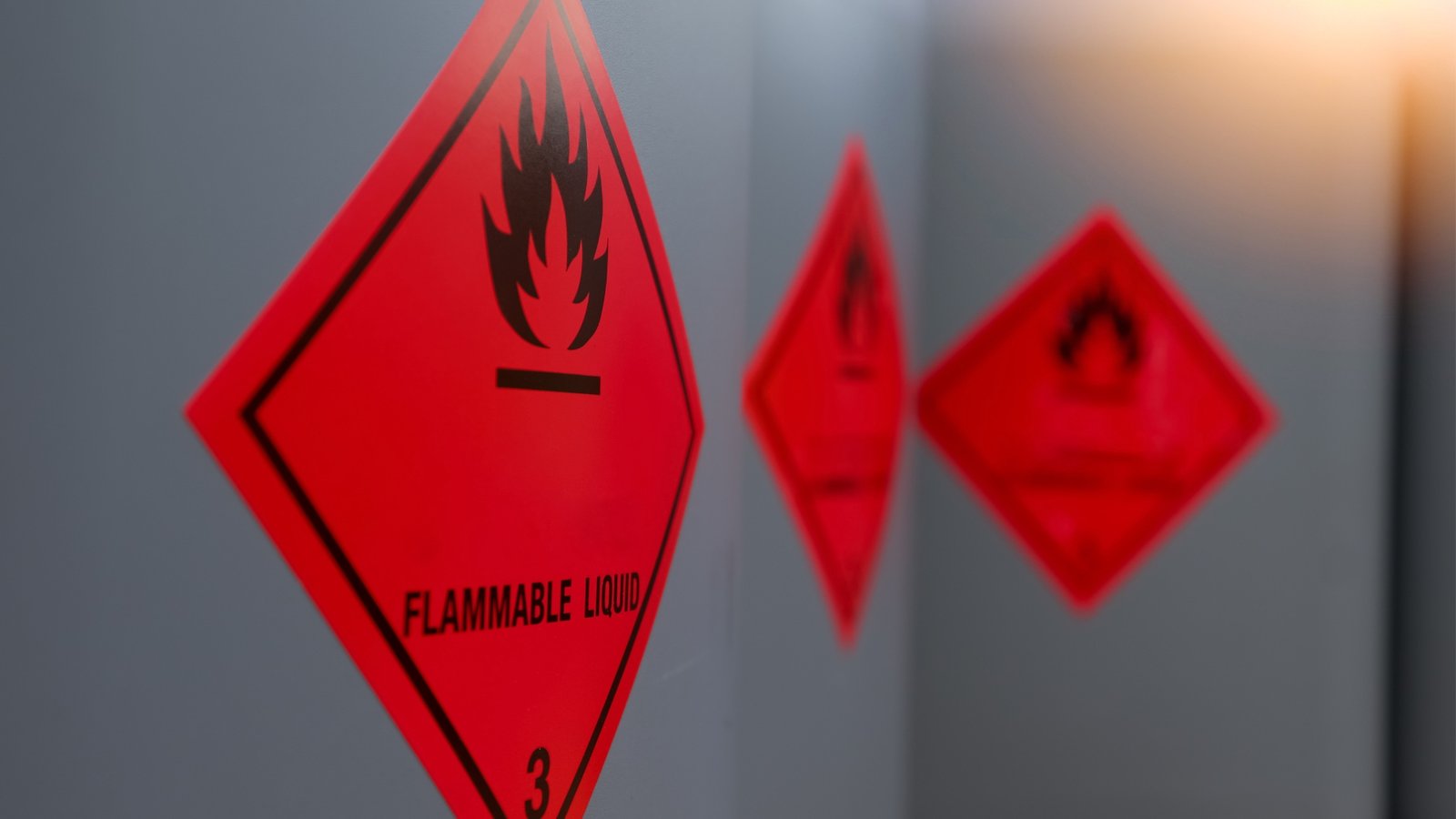
- Cleary mark ignitable liquids for safe handling and quick identification of hazard
- Regularly inspect containers, piping, and storage areas for leaks, corrosion, or damage
For more information on how Zurich Resilience Solutions can help your company manage ignitable liquids and meet tomorrow prepared by offering data-led risk engineering and risk management services, please contact Ida Nygård.